Address
304 North Cardinal
St. Dorchester Center, MA 02124
Work Hours
Monday to Friday: 7AM - 7PM
Weekend: 10AM - 5PM
Address
304 North Cardinal
St. Dorchester Center, MA 02124
Work Hours
Monday to Friday: 7AM - 7PM
Weekend: 10AM - 5PM
Category: STREET CULTURE
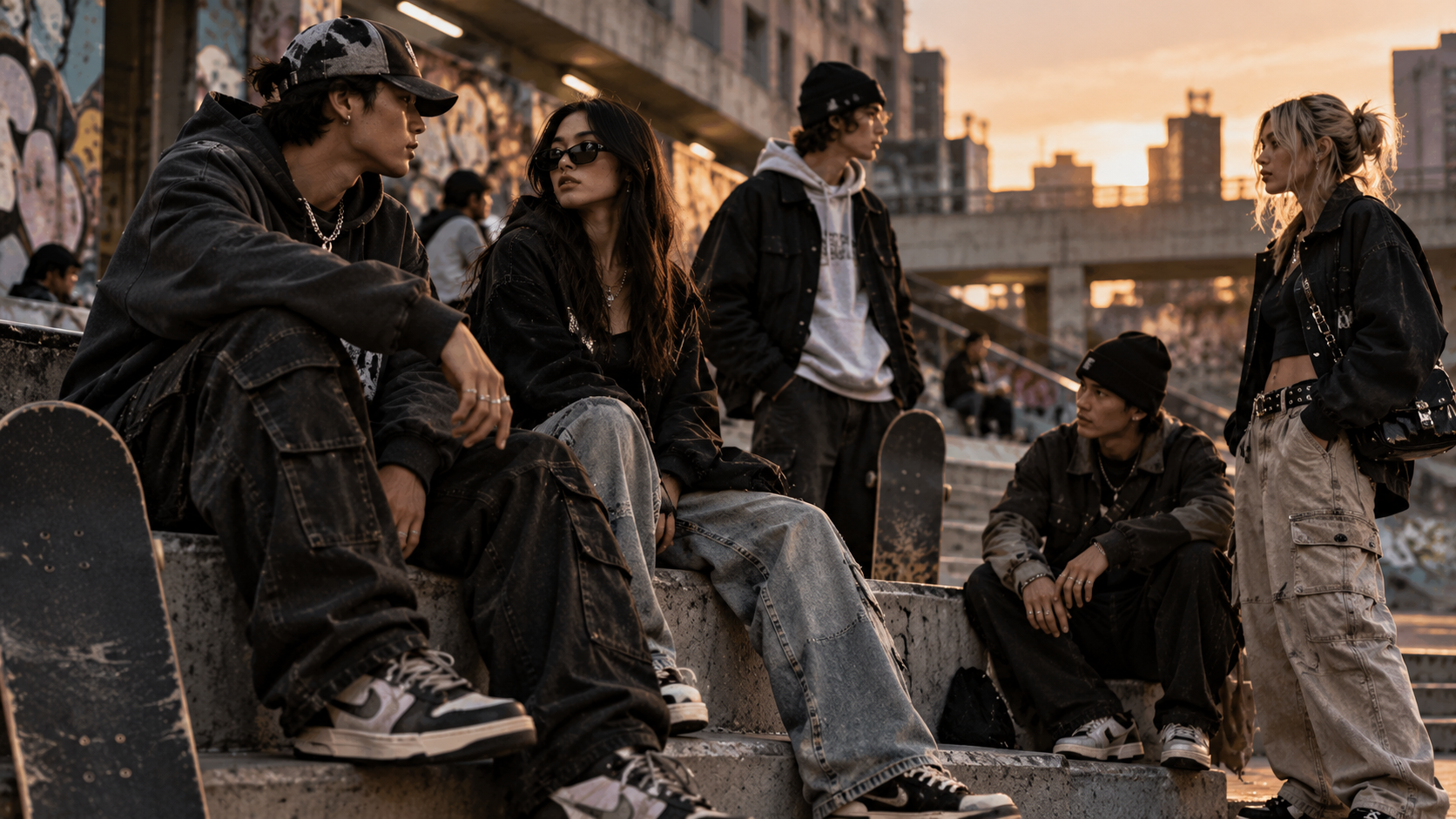
The hype era isn’t necessarily over—but streetwear in 2026 is becoming more personal, more unpredictable and increasingly difficult to define.
Streetwear was never supposed to follow traditional fashion rules.
Its identity was built outside the established luxury system—from skateboarding, hip-hop, sneakers, music, sports and youth culture.
Then everything changed.
Streetwear moved from sidewalks into luxury boutiques. Sneakers became collectibles. Hoodies appeared on major runways. Collaborations became global events, and limited releases created an enormous resale economy.
For a period, owning the right product could communicate almost everything.
In 2026, that formula is changing again.
The logo has not disappeared. The limited drop has not disappeared. And sneaker culture certainly has not disappeared.
But increasingly, how something is worn matters as much as what it is.
For years, sneaker culture revolved around a familiar cycle.
A collaboration was announced.
Demand exploded.
Pairs sold out.
Resale prices climbed.
And scarcity itself became part of the product’s desirability.
That system has weakened.
GQ’s examination of the 2026 sneaker market describes a scene moving away from the period when major retro releases and headline collaborations automatically dominated attention and resale prices. At the same time, the publication argues that sneaker culture itself remains active—just increasingly fragmented and driven by different communities and tastes. GQ
That distinction is important.
Streetwear isn’t dying.
The definition of what’s cool is becoming harder to control.
One of the clearest examples is footwear.
Fall 2026 doesn’t have a single sneaker silhouette dominating everything.
Instead, completely different ideas are coexisting.
Vogue’s Fall 2026 sneaker report identifies sleek black sneakers, classic white plimsolls, retro trainers, skater silhouettes, metallic finishes, bright runners and heavily embellished sneakers among the season’s visible directions. Vogue
That variety is significant.
For years, sneaker culture could sometimes feel like everyone was chasing the same shoe.
Now the opposite can feel more interesting.
A minimal black sneaker can work.
A chunky skate shoe can work.
A vintage football-inspired silhouette can work.
So can something intentionally strange.
The question is becoming less:
“What sneaker is everyone wearing?”
And more:
“What works with your style?”
Skate influence is particularly visible again.
Wide trousers, relaxed denim, hoodies, graphic pieces and skate-inspired footwear have returned to contemporary styling, while brands far outside traditional skate culture have experimented with those silhouettes.
Vogue has tracked the renewed popularity of skater sneakers from street style into designer fashion, including interpretations associated with houses such as Valentino and labels including The Row. Vogue
But the attraction isn’t necessarily about recreating early-2000s skate style exactly.
It’s about attitude.
Skate clothing was designed around movement and practicality. Oversized proportions and durable footwear existed before those elements became fashion trends.
When contemporary designers borrow from that language, they are borrowing from a culture that already had its own identity.
Denim is experiencing a similar transformation.
Baggy jeans remain visible, but they are no longer the only direction.
GQ’s 2026 menswear trend reporting points toward continued experimentation with denim—different washes, coatings, unusual construction and silhouettes that move beyond the standard straight or baggy jean. GQ
At the same time, slimmer proportions have begun appearing again at major fashion houses.
That does not necessarily mean everyone will suddenly abandon oversized jeans.
It means something more interesting:
multiple silhouettes can exist at the same time.
That freedom is central to where streetwear appears to be heading.
Some pieces survive every trend cycle.
The hoodie is one of them.
Vogue Business’s September TikTok trend tracking shows users once again sharing hoodie rotations, unboxings and closet collections, with brands including Supreme, Stüssy and Denim Tears appearing in the conversation. Vogue
Its longevity makes sense.
A hoodie can exist almost anywhere in contemporary fashion.
Under a leather jacket.
With oversized denim.
Under a tailored coat.
With sneakers.
With luxury accessories.
Or simply on its own.
The hoodie crossed the boundary between streetwear and mainstream fashion so completely that the distinction barely matters anymore.
There was a time when pairing a hoodie with an expensive watch or a graphic T-shirt with a luxury handbag was considered a deliberate clash between two different worlds.
Today, that combination is normal.
Streetwear changed luxury, but luxury also changed streetwear.
Materials improved.
Prices increased.
Collaborations introduced audiences to brands they might otherwise never have encountered.
And consumers became increasingly comfortable mixing categories.
A vintage jacket can sit beside a luxury bag.
A pair of skate shoes can be worn with tailored trousers.
An inexpensive hoodie can be paired with an exceptional watch.
The outfit no longer needs to belong entirely to one brand—or even one price category.
Perhaps the biggest trend in 2026 is therefore not a specific product.
It’s individuality.
Vogue’s Fall 2026 coverage repeatedly emphasizes personality-driven styling, with expressive accessories, unusual combinations, texture and individualized details becoming important across both runway and street style. Vogue
That idea feels particularly relevant after years of algorithm-driven microtrends.
Social media can make something globally visible overnight.
But it can also make every trend feel exhausted just as quickly.
Personal style offers an alternative.
Instead of replacing an entire wardrobe every few months, pieces from different periods can be combined.
Old with new.
Luxury with streetwear.
Minimal with graphic.
Vintage with contemporary.
The contradiction becomes part of the identity.
Streetwear once gained much of its power from exclusivity.
You needed to know the brand.
You needed to know the drop.
Sometimes you needed to know where to stand in line.
That insider knowledge created community—but also hierarchy.
Today’s street culture is more complicated.
The rarest item in an outfit is not automatically the most interesting one.
Sometimes the strongest look is built around an old pair of jeans, a perfectly faded hoodie or sneakers that have actually been worn.
The object matters.
But the person wearing it matters more.
At XLG, we don’t see luxury and streetwear as opposing worlds.
Modern style moves freely between them.
A carefully made watch can exist beside distressed denim.
Fine jewelry can be worn with a graphic hoodie.
A luxury handbag can work with sneakers.
What connects these objects isn’t necessarily price.
It’s identity.
Streetwear in 2026 feels exciting because the rules are becoming less obvious again.
Hype still exists.
Icons still matter.
Limited releases will continue to create excitement.
But the next era of streetwear may belong less to the person who owns everything everyone wants—and more to the person who knows exactly how they want to wear it.
— XLG Journal